
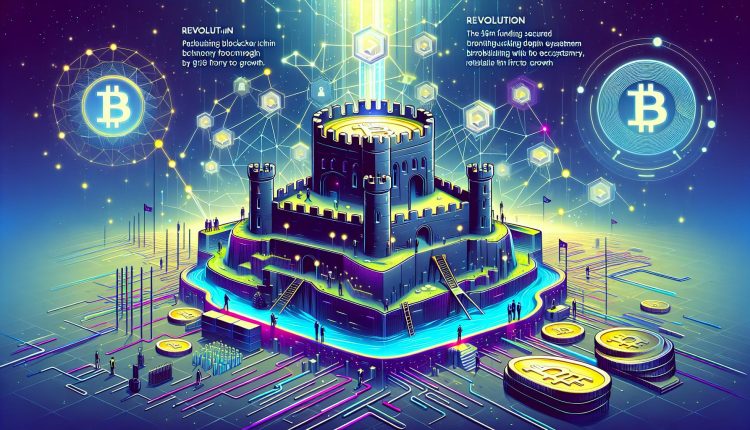
Peaq’s Layer-1 Blockchain Revolution: Securing $15M to Grow Its Groundbreaking DePIN Ecosystem
Exploring the Future of Decentralized Infrastructure: Peaq’s $15 Million Milestone
In an era where blockchain technology is reshaping various sectors, the concept of decentralized physical infrastructure networks, or DePIN, is making waves. By integrating blockchain technology with token incentives, DePIN networks offer a pioneering approach akin to decentralized versions of traditional cloud services like Amazon Web Services (AWS) or Google Cloud. This innovation allows various projects to leverage shared infrastructure without the need to invest in and manage their own equipment. One of the leading platforms in this space, Peaq, has recently announced a significant leap forward, securing $15 million in a strategic funding round. This financial injection is set to propel the expansion of Peaq’s ecosystem, marking a pivotal moment in the decentralized infrastructure domain.
Revolutionizing Infrastructure Through Blockchain
At the core of Peaq’s mission lies the goal to revolutionize the way infrastructure networks are built and utilized. By employing blockchain technology, Peaq facilitates the creation of decentralized physical infrastructure networks, offering a sustainable and efficient solution for projects across different spheres. This groundbreaking approach has seen Peaq host more than 20 DePIN networks, showcasing the platform’s capacity and its pivotal role in this emerging sector.
A Strategic Consortium Fuels Peaq’s Vision

The recent funding round, amounting to $15 million, was spearheaded by industry stalwarts Generative Ventures and Borderless Capital. The round also saw notable contributions from Spartan Group, CMCC Global, and Animoca Brands. This collaborative investment underscores the confidence and enthusiasm of leading capital groups in Peaq’s vision and its underlying technology. With this strategic financial backing, Peaq is well-positioned to advance its ecosystem ahead of the highly anticipated mainnet launch and the debut listing of its PEAQ token.
The Road Ahead: Mainnet Launch and Ecosystem Expansion
With the successful closure of this funding round, Peaq stands at the brink of a new chapter. The forthcoming mainnet launch is set to unlock new possibilities, paving the way for an expanded DePIN ecosystem. Projects and developers across the globe are eying Peaq’s progress, anticipating the opportunity to harness this decentralized infrastructure for innovative applications and services. Peaq’s commitment to building a more connected, efficient, and sustainable infrastructure landscape is not just a boon for blockchain enthusiasts but signals a shift towards a more decentralized future for technology infrastructure at large.
A Decentralized Alternative to Traditional Cloud Services
Drawing parallels between DePIN networks and established cloud services illuminates the transformative potential of Peaq’s offering. Much like how AWS and Google Cloud revolutionized the digital infrastructure by providing scalable cloud solutions, Peaq aims to redefine the infrastructure landscape through decentralization. By removing the barriers to entry for utilizing high-grade infrastructure, Peaq empowers projects to focus on innovation and development rather than the logistical challenges of owning and operating physical equipment. This shift towards a shared, decentralized infrastructure model could herald a new era of efficiency and collaboration across various sectors.
In conclusion, Peaq’s recent funding achievement is a testament to the potential of blockchain technology to innovate beyond the digital realm and into the physical infrastructure that underpins our connected world. As Peaq gears up for its next phase of growth, the broader industry watches with anticipation, eager to see how decentralized physical infrastructure networks will shape the future of technology infrastructure. With a robust platform, strategic investment, and a clear vision, Peaq is positioned to lead this transformative journey, moving us closer to a more decentralized and efficient global infrastructure ecosystem.