
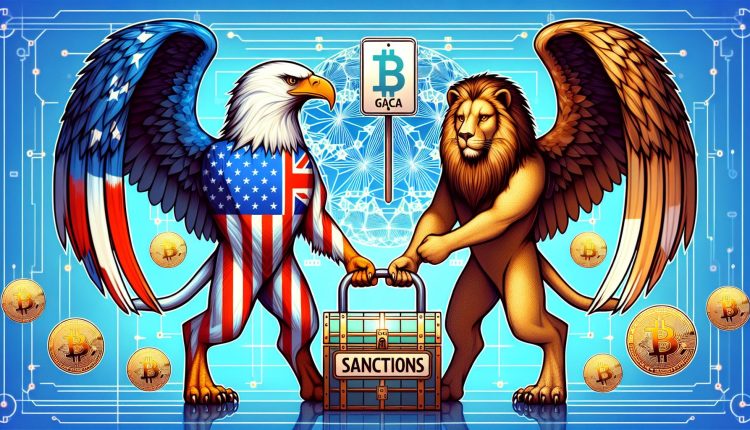
U.S. and U.K. Unite to Impose Sanctions on ‘Hamas-Aligned’ Gaza Now
Navigating Cyber Warfare: The Emergence of Cryptocurrency in Terrorist Financing
The Alarming Utilization of Digital Currencies by Gaza Now
In the digital era, the shadow of terrorist financing has extended into the realm of cryptocurrencies, a trend vividly illustrated by the case of Gaza Now and its founder. Following the distressing events of October 7 in Israel, this pro-Hamas online platform came under stringent sanctions by both the United States and the United Kingdom. This decisive action was taken as a response to their involvement in orchestrating financial support for Hamas, utilizing the anonymity and rapidity of digital currencies to advance their cause.
Tracking the Money Trail
Investigations by the blockchain analytics firm, Elliptic, shed light on the financial footprint of Gaza Now, revealing that it garnered around $21,000 in cryptocurrencies in the aftermath of the aforementioned attack. This figure, although seemingly modest, underscores a worrying trend of terrorist organizations leveraging digital currencies to fuel their operations discreetly.
A Comparative Lens on Crypto Donations

Despite the increasing scrutiny of digital financial transactions, terrorism financing through cryptocurrencies remains a relatively minor component of the broader landscape. A pivotal report by TRM Labs in 2023 illuminates this issue, indicating that a significant majority of crypto donations towards terrorist groups are less than $500, with a notable portion not exceeding $100. This perhaps reflects the decentralized nature of such campaigns, allowing for small yet numerous contributions. Interestingly, only a minuscule fraction of these donations surpass the $5,000 mark, highlighting the micro-scale at which these operations currently function.
Cryptocurrency Preferences among Terrorist Entities
The TRM Labs report further delves into the preferences of these nefarious entities, pinpointing Tether (USDT) on the TRON blockchain as the prevailing choice in 2023. The selection can be attributed to several factors, including the affordability of transaction fees, the stability in token value, and a lingering, albeit outdated, belief in its enhanced anonymity. Remarkably, there has been a 125% surge in the use of TRON addresses linked to terrorist financing activities within the last year, indicating a shifting paradigm in the mechanics of crypto terrorism.
Joint Sanctions and the Path Forward
In their relentless pursuit to dismantle the financial channels of terrorism, the U.S. Treasury Department’s Office of Foreign Asset Control (OFAC) and the UK’s Office of Foreign Sanctions Implementation have imposed sanctions on several individuals and entities, including Gaza Now’s leading figures. This coordinated effort underpins a strong international stance against the exploitation of cryptocurrencies for terrorist purposes, emphasizing the imperative to evolve regulatory measures and tracking mechanisms to counter this digitally-facilitated threat.
Concluding Thoughts
The convergence of digital innovation and terrorist financing poses unprecedented challenges for global security. As demonstrated by the episode involving Gaza Now, the imperative for robust, coordinated international action has never been more critical. By staying ahead in the technological curve and reinforcing the integrity of digital financial ecosystems, the global community can aspire to demobilize the fiscal engines that sustain terrorist activities. The path is fraught with complexities, but the collaborative spirit and technological prowess of nations offer a beacon of hope against the shadows of terrorism in cyberspace.