
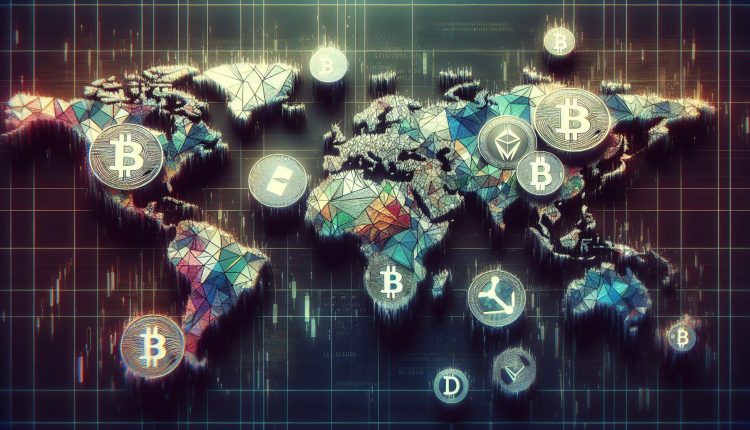
Redefining Boundaries: Exploring the Potential of Decentralized Mapmaking
The Essential Role of Modern Mapping Technologies
In today’s interconnected world, billions depend on maps for daily navigation, making them as crucial as basic necessities like food and shelter. People have become increasingly reliant on their navigation tools, much like they depend on their natural senses, to guide them from one place to another. Maps are no longer just tools for direction; they serve as vital digital interfaces that provide a myriad of information and facilitate various services.
The Truth Behind Our Maps
While we depend on maps to be precise and truthful, discrepancies often exist. Digital maps now serve multiple functions—they are not merely guides but platforms for data aggregation and marketing. For example, Google Maps, used monthly by over a billion users, and GPS systems used weekly by 60% of American drivers as per certain industry studies, illustrate the integral role maps play in our daily lives from finding places to enabling services like deliveries and ridesharing.
Despite their utility, questions about the integrity and neutrality of map data persist. Who controls what information is included or excluded? Are these digital guides leading us down the best path, or are they biased by commercial interests or other influences?
Transparency in Cartography: A Modern Necessity
Today, a handful of major cartography corporations dominate map production, influencing countless decisions affecting daily movement and commercial activities. These companies often design maps that cater to specific business interests, which might not necessarily align with user needs or preferences. Sponsored spots on maps can mislead users, undermining the authenticity of mapping services.
Additionally, the monetization of maps isn’t inherently wrong; nonetheless, it raises concerns about the neutrality of free-to-access consumer maps, which are often influenced by advertising dollars. Moreover, companies must maintain profitability to fund ongoing data collection and innovation, resulting in a delicate balance between commercial influence and data integrity.
On a corporate level, proprietary data helps companies stay competitive, yet this often results in less dynamic and current maps for the public. The need for open-source solutions is evident, with decentralized projects aiming to break down the barriers created by traditional mapping entities.

Challenges of Current Map Systems and the Path Toward Decentralization
The map-making process, despite technological advancements, still harbors potential for bias and error, with cartographers making critical decisions that can sway data presentation. There have been instances where geopolitical biases and corporate interests have led to misleading information being disseminated through popular mapping services.
In response to such challenges, initiatives like OpenStreetMap (OSM) have emerged, promoting a collaborative approach to map-making. Launched in 2004, OSM represents a significant step towards unbiased cartography, driven by a global network of volunteers. However, despite its open nature, it struggles with maintaining data currency and accuracy, reliant on outdated or donated imagery to fill its database.
Leveraging Technology to Revolutionize Mapping
The concept of minimizing human intervention in map-making is being realized through innovative applications of blockchain technology. Platforms such direction-dependent technology employ blockchain to create a self-regulating system of map data verification, rewarding contributors with cryptocurrency for their unbiased, direct data inputs.
For instance, projects like Hivemapper encourage widespread participation by equipping drivers with dashcams that automatically gather and validate geographic data. This model leverages everyday activities for continuous map data collection and verification, circumventing traditional dependencies on central mapping authorities.
Toward a More Customized and Democratic Mapping Experience
The future of mapping lies in democratization. By offering everyone equal access to comprehensive, accurate, and real-time map data, we challenge the monopolies that have long controlled this crucial aspect of modern technology. With decentralized networks and open APIs, developers and the public can craft a mapping experience that truly meets their needs without the skewed influence of powerful intermediaries.
In an era where truth and transparency are paramount, the shift towards open-source and blockchain-based mapping platforms represents not only technological innovation but a reclamation of trust and neutrality in how we view and traverse our world.