IOTA: Using Scylla for distributed storage of the Tangle
This post explores how the IOTA Foundation integrated Scylla into its permanode software, Chronicle, to support real-world applications on the Tangle.
Introduction to IOTA
IOTA is an open-source distributed ledger technology (DLT), designed to support frictionless data and value transfer on the Tangle.
The Tangle is the distributed ledger that’s shared across all nodes in an IOTA network. Any client, anywhere in the world, is able to send transactions to any node, and that transaction will be validated and replicated across the rest of the network to form one version of truth.
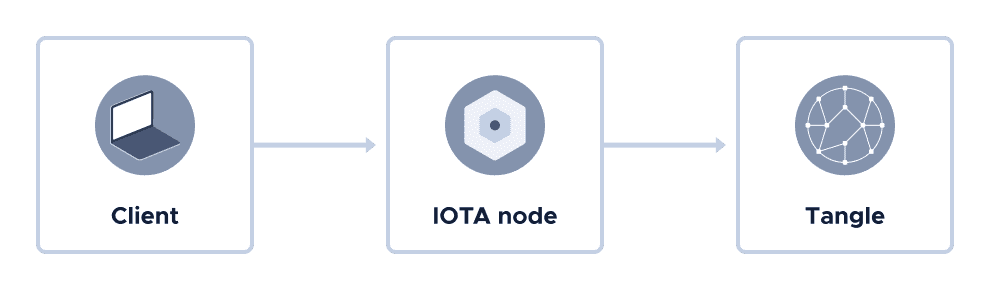
Differences between the Tangle and blockchains
Blockchains and the Tangle both fall under the same top-level category: DLT. The main difference between the Tangle and a blockchain lies in its data structure, which gives the Tangle the following unique features:

- No transaction fees
- No miners
The blockchain data structure consists of a chain of sequential blocks, where each block contains a limited number of transactions. As a result, you can attach new transactions to only one place: A block at the end of the chain.
To secure the network against attacks, each block in a blockchain must be mined. Mining requires a lot of computational power, which is why miners are incentivized by transaction fees and block rewards.
Due to this block limitation known as the blockchain bottleneck, blockchain networks often experience slow confirmation times and high transaction fees.
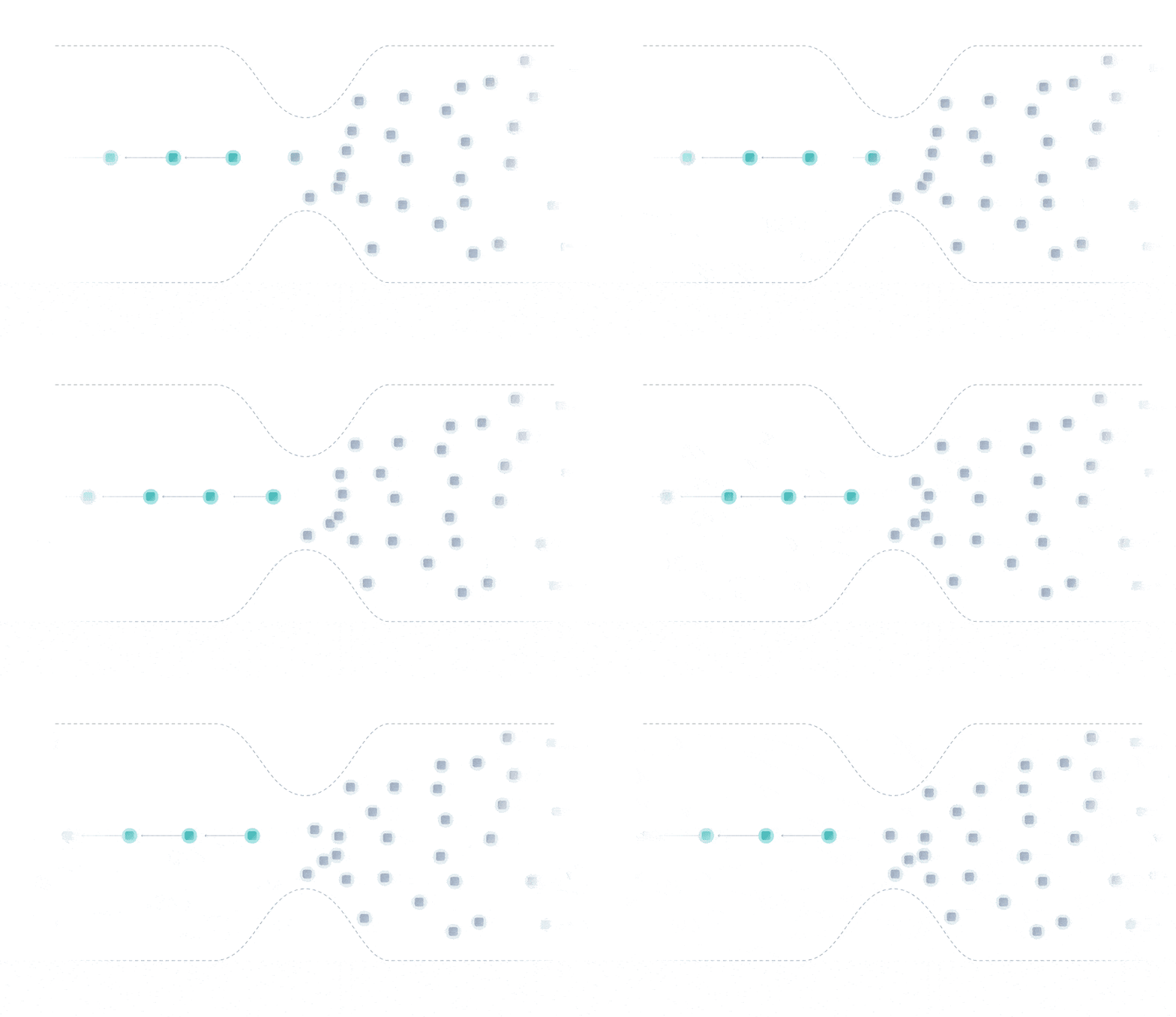
The Tangle data structure is a directed acyclic graph (DAG), where each transaction approves two previous ones.
Rather than being limited to a single place for attaching new transactions, you can attach transactions anywhere in the Tangle, which drastically reduces the limit on confirmation times.