
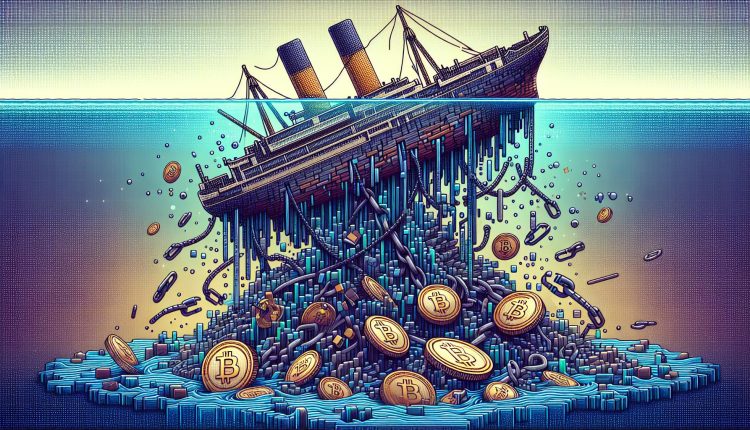
$292 Million Vanished: The Monumental 2026 Kelp DAO Crypto Heist Leaves Wrapped Ether Stranded on 20 Chains
Unprecedented Cryptocurrency Heist: Kelp DAO Loses $292 Million in Major Security Breach
Massive Theft of rsETH Disrupts Crypto ecosystem Across Multiple Platforms
On a seemingly ordinary Saturday, the cryptocurrency community was rocked by one of the largest security breaches in recent history. An unknown entity successfully extracted 116,500 units of rsETH, which constitutes about 18% of its total circulating supply, from Kelp DAOS bridge powered by layerzero technology. This event led to immediate and widespread action across various financial platforms including Aave, SparkLend, Fluid, and Upshift as they initiated emergency protocols to mitigate further damage.
Details of the Incident and Immediate Fallout
The breach occurred late in the evening on April 18th, 2026. The attacker targeted wrapped ether (rsETH), causing significant disruption due to its stranded state across no fewer than 20 different blockchain networks. This strategic attack not only highlighted vulnerabilities but also prompted a swift freeze on transactions within several major lending and borrowing services to prevent any exploitation of the stolen assets.
Analyzing the Impact on Decentralized Finance (DeFi)
This incident serves as a stark reminder of the inherent risks associated with decentralized finance (DeFi) platforms. Despite their advantages in terms of transparency and reduced reliance on traditional financial intermediaries, DeFi ecosystems are not immune to sophisticated cyber-attacks that can lead to substantial financial losses.
the theft from Kelp DAO underscores critical vulnerabilities within cross-chain operations where assets like rsETH become prime targets for malicious activities due to their pivotal role and value within these networks. As DeFi continues to evolve at a rapid pace, this event may serve as a catalyst for strengthening security measures across all platforms involved with or connected to such technologies.
Broader Implications for Blockchain Security protocols
In response to this breach, there is likely going be an industry-wide reassessment of security protocols especially concerning bridges between different blockchains which have become essential yet vulnerable points within the ecosystem. Enhanced security measures could include more rigorous monitoring systems that can detect unusual patterns indicative of potential breaches before they escalate into larger crises.
Moreover, this incident might accelerate regulatory discussions aimed at establishing clearer guidelines for operational standards within DeFi projects notably those involving cross-chain technologies which currently operate under varied levels compliance scrutiny depending upon jurisdictional frameworks governing them.
conclusion: A Call for Heightened Vigilance
As we move forward from hear it becomes imperative that all stakeholders involved—from developers users regulators alike—work collaboratively towards creating safer more resilient infrastructure capable handling evolving threats landscape without compromising innovation growth opportunities offered by blockchain technology decentralized finance sectors respectively.
Exploring the dynamics of SVG in Modern Web Design
The Power of Scalable Vector Graphics (SVG)
Scalable Vector Graphics (SVG) have revolutionized the way we design and interact with visuals on the web. Unlike traditional image formats,SVGs are composed of vectors rather than pixels. this means they can be scaled to any size without losing quality, making them ideal for responsive web design.
Advantages of Using SVG Over Traditional Formats
One significant advantage of SVG is its scalability. Whether you’re viewing an SVG image on a small mobile device or a large desktop screen, it maintains crispness and clarity. This adaptability is crucial as it ensures that visuals look their best on any platform.
another benefit is its performance efficiency. SVG files are frequently enough smaller than their bitmap counterparts like PNG or JPEG,which contributes to faster page load times—a critical factor in user experience and SEO rankings.
Interactive Features and Animation Capabilities
SVG goes beyond static images; it supports interactivity and animation. Developers can manipulate them through CSS or JavaScript, allowing for dynamic effects like hover states, transitions, and complex animations that engage users more effectively than ever before.
For instance, consider a simple animated logo that changes color when hovered over—it not only captures attention but also enhances user engagement without requiring high-resolution downloads.
Practical Applications in Web Projects
In practical terms, using SVG can significantly enhance web projects:
- icons: From navigation icons to social media logos, SVG ensures these graphics remain sharp at various sizes.
- Charts and Graphs: For data visualization, scalable vectors provide clear readability at all resolutions.
- Thematic Illustrations: Full-scale drawings are rendered beautifully across devices ensuring consistent branding.
Optimizing SEO with Scalable Vector Graphics

From an SEO perspective,the use of SVGs contributes positively by reducing load times and enhancing user engagement metrics such as time on site and interaction rates. Moreover, since search engines index SVG content just like HTML text content—thanks to their XML-based structure—it’s possible to improve your site’s visibility by incorporating relevant keywords into your graphic descriptions or titles.
Conclusion: Embracing the Versatility of SVG
As digital landscapes continue evolving towards more visually driven interfaces across varied devices from smartphones to desktop computers with retina displays—the role of Scalable Vector Graphics will only grow stronger in creating responsive designs that do not compromise on quality or performance. By integrating this versatile format into your web projects effectively while considering both aesthetic appeal and technical optimization strategies such as SEO-amiable practices—you can achieve superior visual storytelling alongside enhanced online presence.
Analyzing the Impact of a Major Cross-Chain Bridge Exploit
The Incident Unfolds: A Significant Breach in DeFi Security
In a startling development that has sent shockwaves through the decentralized finance (defi) community,a cross-chain bridge was compromised,resulting in the loss of a substantial amount of restaked ether (rsETH). This event occurred at approximately 17:35 UTC on Saturday when an unauthorized entity successfully extracted 116,500 rsETH—valued around $292 million. This figure represents nearly 18% of the total circulating supply of rsETH, as per data from CoinGecko.
Technical Breakdown: How the Attack Happened
The breach exploited vulnerabilities within LayerZero, an infrastructure designed to facilitate secure inter-blockchain communications. By deceiving this system into accepting a fraudulent instruction from another network, the attacker was able to commandeer funds from Kelp DAO’s bridge. This protocol is known for converting deposited ETH into additional yields over standard Ethereum staking rewards by issuing rsETH as a tradable asset.
Immediate Reactions and mitigation Efforts
Kelp DAO responded swiftly by activating its emergency protocols to freeze core contracts merely 46 minutes post-breach.Despite these efforts, subsequent attempts to siphon an additional 80,000 rsETH where made but ultimately failed due to reverted transactions.
The ramifications extended beyond Kelp DAO; several platforms including Aave and Lido Finance took preventive measures by freezing transactions involving rsETH or related products. These actions reflect growing concerns about potential vulnerabilities within similar protocols across various networks.
Broader Implications for DeFi Stability and Investor Confidence
This incident not only underscores critical security challenges inherent in cross-chain operations but also highlights potential systemic risks facing wrapped tokens on secondary layers or L2 blockchains. as these reserves underpinning token values were compromised, it triggered widespread uncertainty among investors regarding the intrinsic value of their holdings on non-ethereum networks.
Moreover, this event has prompted other financial entities within DeFi to reassess their exposure to such risks. For instance, Ethena halted its LayerZero OFT bridges as a precautionary measure while confirming its stablecoin reserves remained robustly collateralized.
Market Response and Future Outlook
The market’s reaction was swift and severe with notable declines in associated asset prices reflecting investor apprehension about further undisclosed vulnerabilities. The broader impact on DeFi could potentially accelerate calls for enhanced regulatory frameworks and more rigorous security protocols across decentralized platforms.
As Kelp DAO collaborates with external auditors and security experts to investigate this breach thoroughly—aiming at understanding how their systems’ defenses were bypassed—the future resilience of DeFi hinges significantly on outcomes from such introspections and subsequent enhancements in technological safeguards against similar exploits.
Understanding Bitcoin Mining Pools: Distribution and Rewards
Bitcoin mining pools are a critical part of the cryptocurrency ecosystem, allowing individual miners to combine their computational power and increase their chances of earning mining rewards. This collaborative effort not only stabilizes income for participants but also enhances the efficiency of the mining process.
Reward Allocation in Mining Pools
In a typical scenario within these pools, when a block is successfully mined, the rewards are distributed among all participants. as an example, if a pool successfully mines a block that yields 3.125 bitcoins,the distribution might work as follows: The miner who discovers the block—often referred to as the ‘block finder’—is directly rewarded with 1 bitcoin. The remaining 2.125 bitcoins, along with any transaction fees collected with that block, are then shared proportionally among all pool members based on their contributed computing power.
This method ensures that even those who did not find the block receive compensation for their efforts and resources expended during the mining process. It democratizes earnings and mitigates risk since mining independently can often result in long periods without reward due to high competition and difficulty levels.
Enhancing Fairness and Efficiency
The proportional distribution model promotes fairness within the community by aligning rewards closely with contribution levels. This approach not only motivates miners to contribute more resources but also supports smaller players who might or else struggle to compete against larger setups if working solo.
Moreover, pooling resources significantly reduces variance in payment frequency—a crucial factor for many involved in this high-stakes endeavor where electricity costs can be substantial and profitability may hinge on consistent returns over time.
Conclusion
Mining pools play an indispensable role in maintaining both stability within blockchain networks by ensuring more consistent transaction validation times and providing individual miners viable pathways toward profitability through collective effort.