
Layer 0 — The real reason why Dominik Schiener said “IOTA is NOT an Ethereum killer”
The idea behind Ethereum is ingenious: Connect computers from all over the world to build the most decentralized world-computer possible. However, we also all have seen the problems of the current, monolithic “one blockchain fits all” solution: Exploding fees, clogged network, long processing times and subsequently slow adoption in the real-world. You have all heard about Ethereum layer 2 solutions like Elrond or Polygon. But have you ever considered to solve Ethereums problems by seeing it as a second layer of an even more fundamental network?
This is exactly the strategy the IOTA foundation revealed with its recent IOTA smart contract protocol (ISCP) beta release.

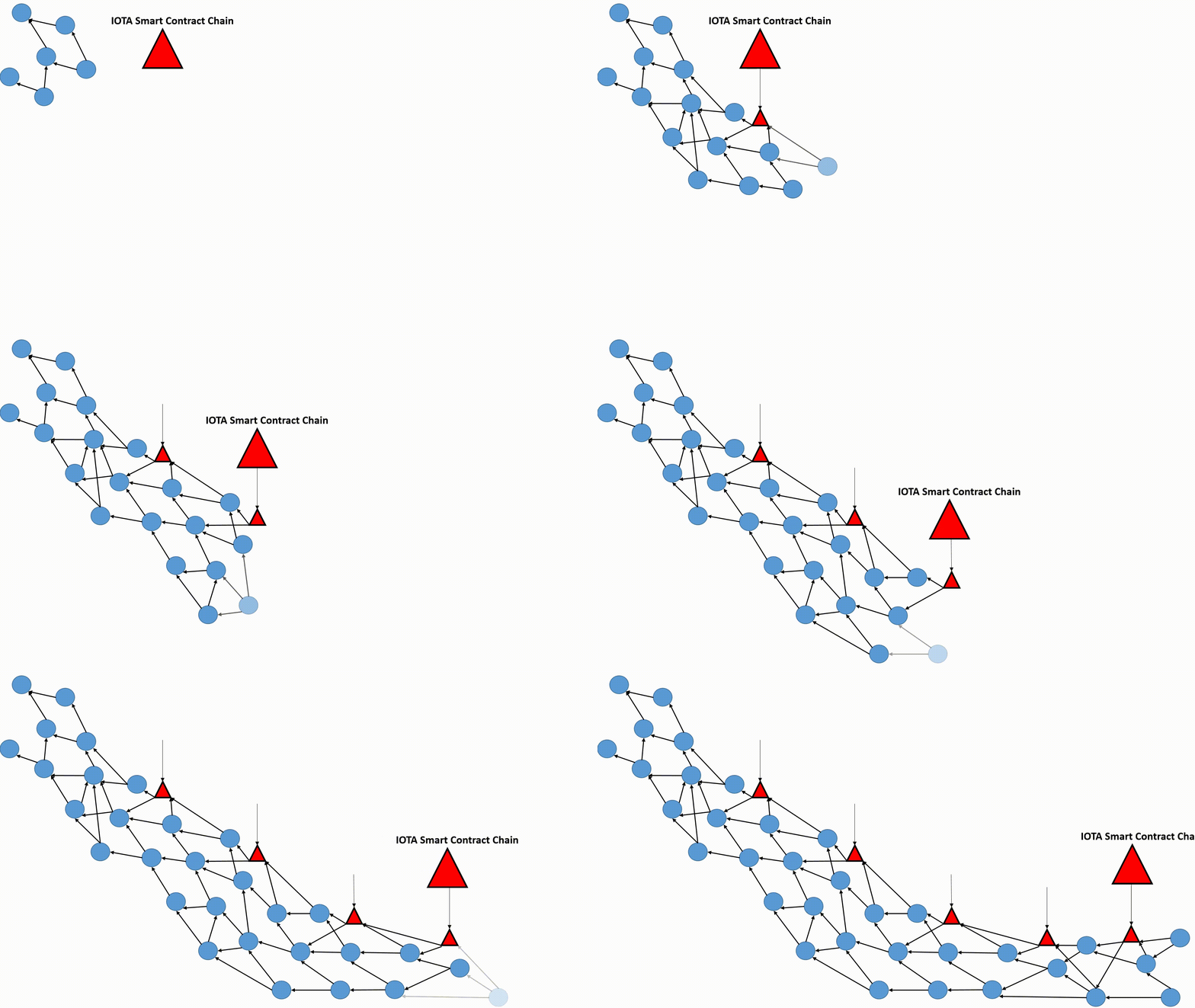
They made the unique decision to have smart contracts not as a part of their feeless base-layer (the “Tangle”), but instead as a second layer solution. Each smart contract is one individual blockchain and is run by its own committee of nodes. This committee performs all smart contract computations internally and connects to the IOTA main-layer to create and send digital assets (NFTs, wrapped tokens, etc.) IOTA tokens and to communicate seamlessly with all other IOTA smart contract chains.
This layout allows IOTA smart contracts to be extremely flexible in design, different for each usecase and each user, while bein extremely scalable. It is the antithesis of the “one blockchain fits all” paradigm, a true cooperative multi-blockchain environment.
IOTA smart contract chain can choose freely between: