
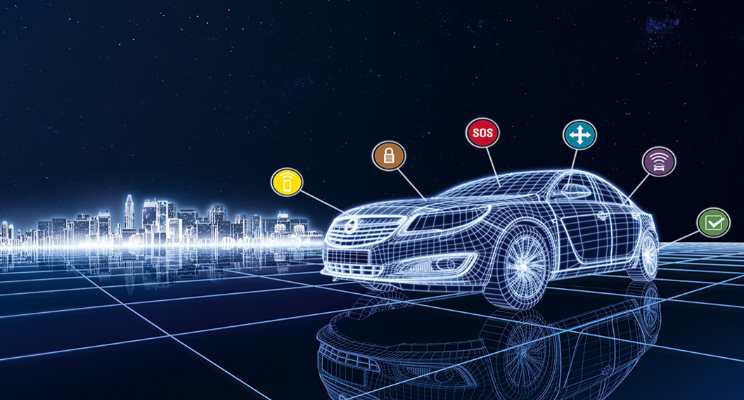
The Future of Mobility, Fuelled by Artificial Intelligence and Distributed Ledger Technology
The digital transformation in the Automotive Industry is creating more data than ever before. According to a study conducted by McKinsey, the value pool of car-data-monetization could be as large as $750 billion by 2030. According to the study, the opportunity for auto manufacturers hinges on their ability to 1) quickly build and test automotive data-driven products and services and 2) develop new business models built on technological innovation, advanced capabilities, and partnerships that push the boundaries of the automotive industry. Given these two goals, auto manufacturers will be creating a myriad of opportunities for technology developers, startups, insurance providers, data management servers and many more stakeholders.
The demand for data capturing by automotive manufacturers is creating a shift in the traditional mobility business model. To capture this data, vehicles are starting to have their own digital identity and digital wallets, built on distributed ledger technology (DLT). For instance, the transactional data from re-fuelling at a gas station is currently on a credit card, but soon will be housed on a digital wallet owned and operated by a car. This car could generate its own income through a service model and pay for its own fuel, maintenance, and other services. Distributed ledger technology enables a new level of secure data communication between vehicles and infrastructure, like charging stations. With a new layer of infrastructure powered by DLT, Tier 1 Auto manufacturers who have operated independently with silo’ed data, are embracing standardized DLT based protocols that enable interoperability between vehicle-to-vehicle interactions / transactions (V2V) and vehicle-to-infrastructure interactions (V2I). This level of standardization opens up the opportunity to collect data pools that can be can be fed to AI service providers to create additional “intelligent” services for vehicles, such as fleet management, crash prevention, traffic prediction, fleet energy optimization, etc. There are many different opportunities and use cases that auto manufacturers are currently implementing and looking to implement in the near future. To get an understanding of how technology companies can leverage their position to take a piece of the $750 billion pie let’s dig a bit deeper.
How is the industry reacting?
To propel innovative data-driven solutions forward, original equipment manufacturers (OEMs), such as Volkswagen, Toyota, BMW, Ford, GM, Porsche, etc. partner with technology developers to create proof of concept projects (PoCs) implemented in testbeds. Successful PoCs either continue development in house or continue to be outsourced to the technology developers for long term implementation and mass market adoption. For instance the International Transportation Innovation Center (ITIC) has partnered with the IOTA Foundation to build a global alliance of smart mobility testbeds. ITIC’s key focus is to build a global network of open and closed testbeds to incubate and validate AI-based sustainable mobility services in smart city environments using virtual, augmented and physical testing methods in selected testbed sites, as well as generating a test data pool that can be utilized by the whole smart mobility ecosystem. To learn more about specific projects, check out the Toyota Research Institute’s collaboration with the MIT Media Lab on autonomous vehicle fleets, Volkswagen’s partnership with the city of Hamburg to collaborate on mobility testbeds, EY’s blockchain based shared mobility platform, or Jaguar’s investment into a blockchain based startup called Dovu.
These partnerships signal the value that the transportation industry puts on AI and distributed ledger technology (DLT) services as a means to empower meaningful insights and autonomy built on secure communication of data transfer, transactions, and audit trails. Some examples of AI services that could be provided in conjunction with DLT are predictive maintenance, predictive EV charging, energy optimization, and fleet optimization, among many others. To show the overlap of the technologies in a potential testbed, let’s work through a few use cases.
Use Case I — Car-Wallet and Payments in Fleet Management & Energy Optimization
With an integrated digital wallet or wallet app, cars are enabled to make payments on their own. With DLT, payments concerning every aspect of the car’s mobility can be executed quickly, securely and automatically. The importance of this functionality increases with future car generations that have more advanced autonomous functions, including the automation of payments and the development of usage-based insurance (we will talk about that more in our second use case). Currently, DLT enables secure communication of data between entities. This technology allows for a smarter understanding of an entire fleet, leading to an increase in performance of AI powered fleet management and energy optimization. For an example, let’s look at a freight company who is interested in optimizing their fleet through something called platooning.
Platooning. The digitalization and networking of automated vehicles is a key element in the increase of efficiency. Cars need to communicate with each other to, for example, buy data for the optimization of their operational strategy. With Platooning, several vehicles drive behind each other in close proximity, typically used in trucking and freight transportation. Safety is ensured by the communication of the involved vehicles and the real-time exchange of sensor data, enabled by DLT technology. The reduction of the distance between the vehicles leads to significant savings in terms of consumptions due to reduced wind resistance of the following vehicles.
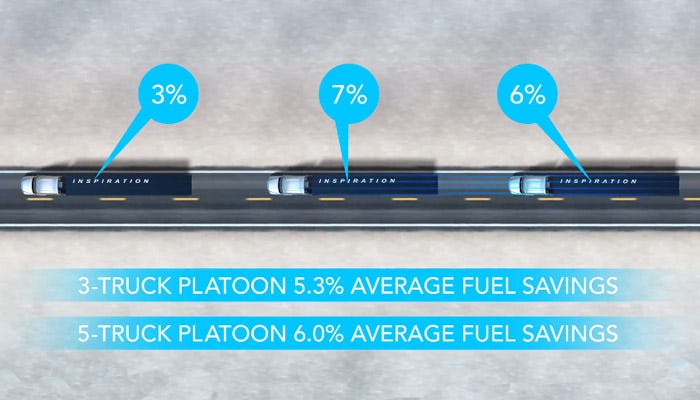
The leading platoon vehicle creates greater energy savings for the trailing fleet while sharing sensor data with other vehicles to detect and bypass potential dangers . With DLT, the trailing fleet could compensate the leading truck for its services and energy savings. Furthermore, with smart contracts, the payment process could be securely automated with real-time data.
In addition to this, the transportation infrastructure could negotiate with the vehicles on the streets in order to optimize the traffic situation using complex algorithms. A future economy could see such a platoon buy a green wave as a premium product to further increase energy savings and reduce traffic volume.
A green wave occurs when a series of traffic lights (usually three or more) are coordinated to allow continuous traffic flow over several intersections in one main direction.
Any vehicle travelling along with the green wave (at an approximate speed decided upon by the traffic engineers) will see a progressive cascade of green lights, and not have to stop at intersections. This allows higher traffic loads, and reduces noise and energy use (because less acceleration and braking is needed). In practical use, only a group of cars (known as a “platoon”) can use the green wave before the time band is interrupted to give way to other traffic flows.
Use Case II —The Self-Owning Car: Autonomous Vehicles and Predictive Maintenance
DLT can be used to provide the means for autonomous vehicles to perform activities inherent to being autonomous. Such services include road usage (driving through tolls), refuelling, recharging (EV’s), parking, and ultimately paying for these services through an integrated DLT-enabled digital wallet, with a distributed ledger of profit and loss statements available to all involved parties to assess, in real-time, the profitability of that fleet.
As a self-owning car, the vehicle represents a financial entity. Besides people, only corporate entities are currently able to close a deal, however, DLT enables machines to inherit liability, creating a new layer of trust. With DLT, the vehicle has its own accounting identity and with the proper application of artificial intelligence and DLT we can create an autonomous management system of income and expenses for the first time in history. In this connected economy, communication and security of data are vitally important. DLT enables this essential backbone of data sharing that artificial intelligence can build on, creating a mutually beneficial partnership.
The Self-Owned Car: Under certain circumstances, the vehicle is able to earn and spend money. Revenues can be achieved with car-sharing, expenses emerge via repairs and charging. The advantage for the customer is the omission of the payment and accounting process, especially in corporate fleets. The vehicle itself can publish a detailed record of all transactions at the end of the month, with bills being paid instantly with smart contracts. This also enables a shift in data ownership. As previously mentioned, credit card companies currently own the transaction data when you swipe your credit card at a gas station, however, as a self-owned car, vehicle manufacturers begin to capture and optimize this valuable fuel and maintenance data. We’ve gone through the significant value and revenue generation opportunities of data ownership in a self owning car model, but a recent implementation opportunity has been found in usage based insurance.
Usage-based insurance allows insurers to create more accurate rates based on probabilities of accidents given real time car data such as telematics / GPS, driving style, travel time, route, frequency and many other data points that are available in real time due to connected cars. Usage based insurance services are already partnering with Tier 1 OEM’s and testbeds to create proof of concept projects enabling DLT smart contracts that could trigger payments in real time. For instance, check out the partnership between Toyota Insurance Management Solutions (TIMS) — Toyota’s joint venture telematics car insurance company — , the Japanese insurance company Aioi Nissay Dowa Insurance Services and the blockchain platform company Gem.
Driving the Future of Blockchains Part Four: Introducing Usage-Based Insurance
The Toyota Insurance Management Solutions team has been putting capital into smart contracts built on top of a blockchain, because they offer several benefits: they enable the automation of claims handling, they are a reliable and transparent payout mechanism for the customer and they can be used to enforce contract-specific rules.

For example, in the case of a car accident, a smart contract can ensure that the claim is only paid out if the car is repaired in a garage preferred and predefined by the insurer. Although such programs could also be implemented without blockchains, a blockchain-based smart contract provides unique benefits. Not only does it deliver an increased degree of transparency and credibility for customers due to decentralization as well as automation of reconciliation and the verification of transactions, but it also provides substantial network effects, either in the case of peer-to-peer insurance or when several parties are using it that would not be able or willing to do this with a centralized platform.
Selling car generated data to usage based insurance companies is one of many revenue generating opportunities for a fleet of self-owned cars. The key that enables this level of mobility as a service, besides the complex algorithms that enable autonomous functionality in AI, is the heightened level of data communication and interactions between V2V and V2I interactions, enabled by distributed ledger technology.
The Future of AI and DLT
In a world that is accelerating the rate of connected devices, it becomes increasingly important for AI and DLT service providers to understand how the two systems interact to create value and revenue generating opportunities. To sum that up: the value that DLT adds to AI is its ability to create connectivity of data in a secure and accountable manner. In a future of autonomous fleets with a need to communicate and transact with each other, DLT is imperative. In the long run, smart cars will not only communicate data between each other, but with smart city and smart home networks, thus enhancing their overall value propositions. Eventually, DLT-powered data exchange platforms will be able to handle massive amounts of data pooled from autonomous cars (with lidars, radars, cameras and other sensors constantly streaming data to various blockchains). The concept of pooled data will be vital in developing standardized transportation systems that can communicate data from different car companies, as it is currently silo’ed by the Tier 1 OEMs. The value of coordinated standardized testbeds can produce a semantic and interoperable data stream of V2V/V2I interactions that can be fed to AI service providers, to enable an intelligent and autonomous mobility infrastructure. Although the development of a safe and reliable autonomous vehicle infrastructure requires a huge amount of driving data, with the aid of a data marketplace, we could shorten development and testing times. This would also help bring autonomous vehicles, and all the expected benefits of this technology (safety, efficiency, convenience), closer to becoming mainstream.
In this future, secure communication and connectivity will continue to be the pillars upon which AI stands, but AI services will also lean on the interoperability and the standardization of data structures; benefits that come with DLT. AI services that want to monetize their analytical capabilities and take a piece of the $750 billion dollar pie, should begin partnering with DLT services, auto manufacturers, and testbeds immediately to have first mover advantage and begin establishing network effects.
How to get started?
I mentioned earlier that automotive manufacturers are creating partnerships with technology companies and testbeds to create PoCs, so how do get started and wheres the money?
Automotive manufacturers want to invest in these technologies, but do not have the resources or budget to tackle every problem — introduce outsourcing. Technology companies need to create partnerships with automotive companies and testbeds to bring their PoC vision to light. If it is successful, the automotive manufacturers will either look to copy the technology, or contract out the tech capabilities and begin to think mass market. It is in this stage, along with data ownership and network effects, where the most value and revenue is generated. Despite the technological complexity, the main challenge remains in the difficulty of organizing the many parties, such as interested and available testbeds and auto manufacturers that are willing to engage in a PoC; this industry relies on knowing the right people or having a strong brand reputation for success.
Conclusion
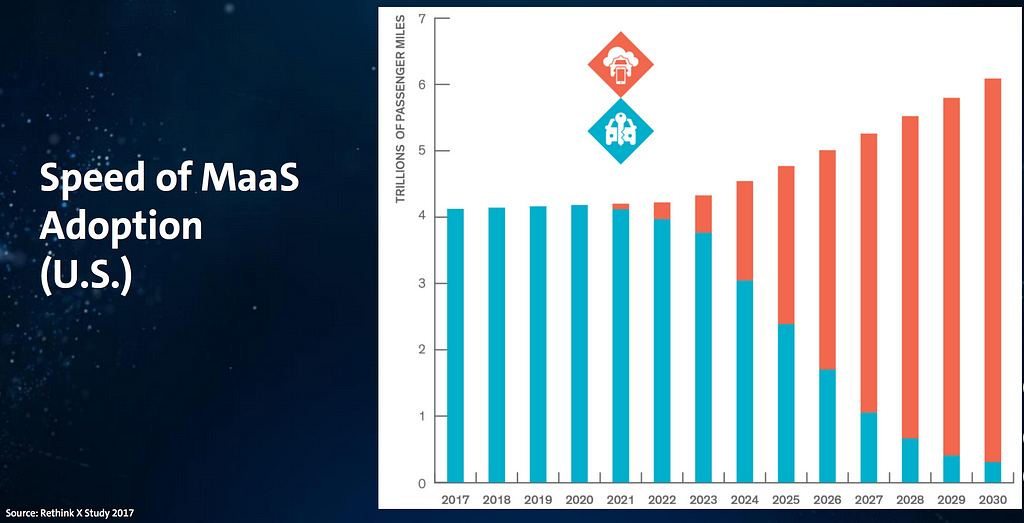
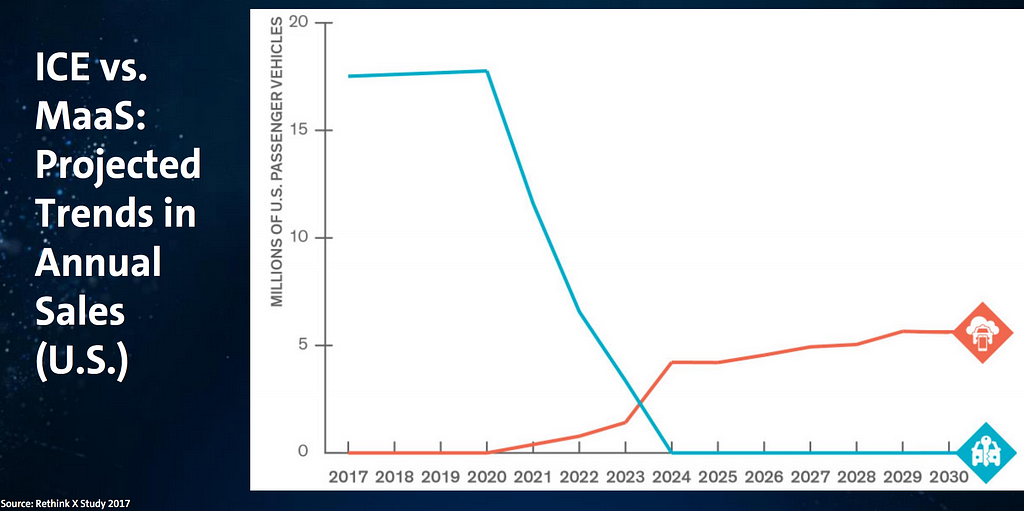
The demand to create PoCs on behalf of auto manufacturers creates revenue generating opportunities and a potential product-market fit for AI and DLT services. Testbeds and PoCs are already being implemented and certain use cases have the right technology readiness level to be implemented within a year. A successful PoC could yield partnerships that last more than 10 years, with mass adoption taking place by 2030, according to research by RethinkX and Volkswagen (check out the graph below).
Combining these use cases with the steps toward value creation has kickstarted the launch of automotive testbeds throughout the world powered by major auto manufacturers. Companies providing AI-as-a-Service that are joining these partnerships benefit from a wealth of exposure into the new dynamics of the mobility industry, gaining a first-movers advantage, while simultaneously developing skillsets in working with blockchain and distributed ledger technologies, a core component in the future of the industry . While the value created may be short term with the possibility of OEM’s bringing AI and DLT services in-house, many of the leading manufacturers are choosing to forgo risk and capital allocation, allowing a myriad of outsourced partnerships to develop. With the possibility of creating long-term partnerships with the largest auto manufacturers and the opportunity to get a head start in the convergence of artificial intelligence and distributed ledger technology, major AI-as-a-Service and technology companies should be on the lookout for partnerships that leverage these capabilities and opportunities.
Remarks
If you like this article, it would be great if you forward it to your colleagues or share it on social networks.
This article is based on research studies from RethinkX, McKinsey Consulting Group, Deloitte, Oracle, EY, Volkswagen, Toyota Research Institute, MIT Media Lab, Martin Gösele and Prof. Dr. Philipp Sandner’s work with the Frankfurt School Blockchain Center, and my experience working in the mobility industry with Kevin Chen of IEN and Dr. Joachim Taiber of ITIC (International Transportation Innovation Center).
Justin Zipkin is an AI and DLT enthusiast and alumni from the University of Michigan’s Stephen M. Ross School of Business (shoutout to MCity!). You can contact him via LinkedIn (https://www.linkedin.com/in/justinzipkin/) or via email ([email protected]).
Sources
https://medium.com/media/e9ddea9f35a54d5725a32f319ed30fec/href
https://medium.com/media/f043fa792fce6a497682bb0d75f65021/href
- Blockchain-based Machine Learning Marketplaces
- Toyota pushes into blockchain tech to enable the next generation of cars
- EY advancing future of transportation with launch of blockchain-based integrated mobility platform
- Blockchain Enabling Mobility-as-a-Service (MaaS) – Disruption Hub
- Volkswagen and Hamburg Collaborate on Mobility Testbed
- Artificial intelligence as auto companies’ new engine of value
- AI is a $215 billion Opportunity for Automotive OEMs: McKinsey
https://medium.com/media/87a828c386b6a9b81d624e1ceb8a6b9a/href